


Louisiana Museum on a Mission

The museum honoring African American history in rural Louisiana reopens Friday 13, 2026.
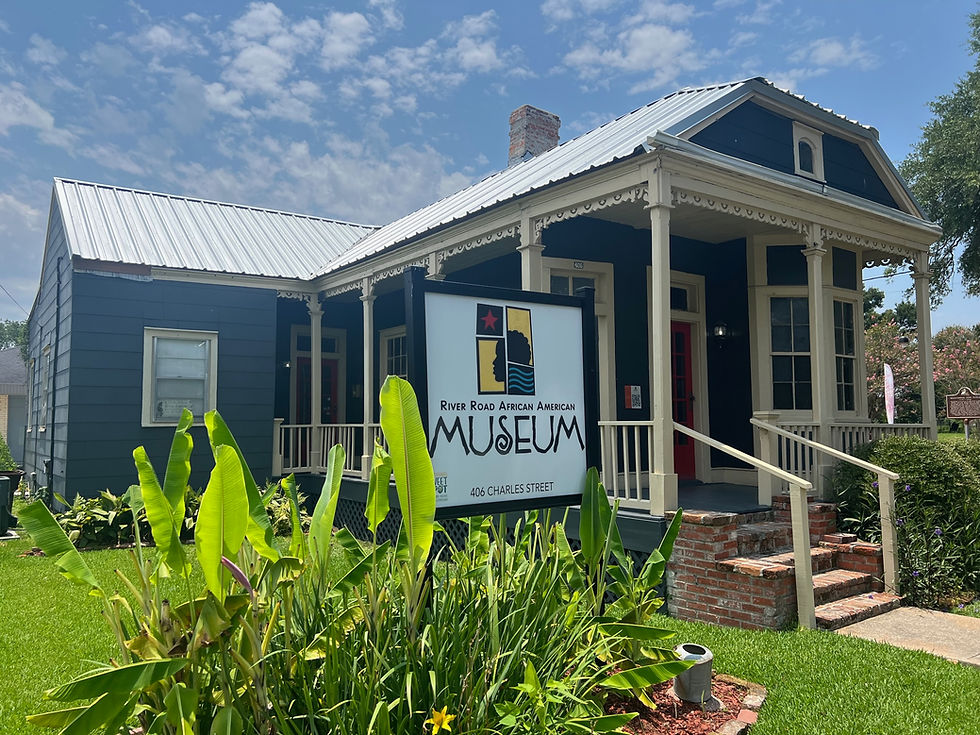
I recently visited Donaldsonville, Louisiana, to explore its historic downtown a short drive from Baton Rouge. The capital of Ascension Parish, and once capital of Louisiana in the early 1800s, Donaldsonville is mostly known for its sugar and cotton industry that birthed wealth and antebellum plantations. The downtown, courthouse and surrounding area are home to wonderful 19th century architecture. And being situated on the Mississippi River, there's lots of Civil War history. Union forces took the city and built Fort Butler and used the fortification to defeat a Confederate attack in 1863.
Here’s where it gets interesting
Defending the fort on that June day were free blacks and fugitive slaves fighting on behalf of the Union. And after the war ended, Methodist minister Pierre Caliste Landry was elected mayor of Donaldsonville, the first African American to be elected as mayor in the United States.

So when I visited this historic town on the Mississippi River I hoped to visit the River Road African American Museum (RRAAM) that a fellow travel writer had raved about. But the museum had experienced storm damage and was closed.
This Friday, March 13, 2026, after a two-year relocation, the museum is returning to its home at 406 Charles Street in downtown Donaldsonville, just in time for its 32nd anniversary celebration. On Friday, the museum will host a rededication ceremony.
Because I was not able to enjoy the museum, I’m posting here what Mindy Bianca Public Relations sent me as a press release on the reopening and its history…
The River Road African American Museum
There’s a lot to celebrate, because this isn’t the first time the museum has changed its location since it opened in March 1994 across the Mississippi River in St. James Parish, at a former plantation home. From its inception, the museum’s mission was to document and share the stories of the African American people who lived and worked in Louisiana’s plantation country, from their days of enslavement to modern times.
In 2003, after its original home burned down, the museum moved across the river to Donaldsonville in Ascension Parish, taking itself out of the business of plantation tourism and instead joining a community where all visitors—but especially school-aged ones—can better access it and more fully engage with its exhibits and programs. Donaldsonville was a logical choice for a museum of this type, as the town has been witness to several significant moments in African American history. For example, in 1868, residents took to the polls and elected Pierre Caliste Landry, who became the first Black mayor in the United States.
For about 20 years, the museum operated out of the former home of Sylvia Watkins, who had taught music lessons to countless children in the community. When Hurricane Ida swept through the South a few years ago and damaged the roof of that building, the exhibits it housed were eventually moved to another facility that RRAAM had acquired about two decades ago … an old Rosenwald School.* Like the original museum building at the plantation house, the school had also once stood in St. James Parish, but it was moved across the river a few years ago in a feat of engineering and community support. The building gave RRAAM a place to operate while the necessary repairs were made to the Watkins House.
Now, as the museum returns to its home on Charles Street, the old Rosenwald School will transition into a community center that hosts summer and after-school programs that focus on science, technology, engineering, math, reading and the arts.
Honoring the arts is a key part of RRAAM’s mission, and the museum is taking what it learned about building preservation with the schoolhouse project and using that in its next big venture … the restoration of the True Friends Benevolent Hall. The museum has assembled a team of architects and preservationists who are working on stabilizing the hall, which dates to the early 1900s. Over the years, the building has served as a school, civic auditorium, meeting place and safe haven for the community.
Benevolent societies were formed to help African Americans, providing financial and emotional support in the event of illness, job loss, death and other times of need. Many of these society buildings eventually evolved into social halls, serving as performance venues for aspiring musicians and as gathering places for the Black community. In fact, the founders of jazz got their start in halls like this one, and their stories will be shared at the next part of the growing museum. Eventually, the True Friends Benevolent Hall will celebrate music and musicians, hosting performances and classes for children and adults alike.
In addition to the Watkins House, Rosenwald School and True Friends Benevolent Hall, RRAAM maintains two other buildings, the Ascension Episcopal Church and a former doctor’s office that features exhibits about Black doctors and midwives in rural Louisiana. It also offers a Freedom Garden at the school, growing medicinal plants and other vegetation with ties to African American culture.
RRAAM can operate these facilities and accomplish its goals through generous support from individual and corporate donors. Among its most committed corporate donors are the petrochemical companies that have acquired former plantation land along the Mississippi River. Acquiring such properties comes with financial benefits but also tremendous responsibility, as those lands are the final resting place of countless enslaved people … typically in unmarked graves. The companies work with Darryl Hambrick, the head of RRAAM, and the archaeology programs at local universities to identify gravesites and try to track down descendants of the people buried in them. Hambrick and his family have served the community as funeral directors for generations, so he says that he has become the “ultimate preservationist” as he combines his professional knowledge with his passion for history.
This is but one example of the type of work RRAAM does and how it serves as an invaluable resource for preserving the African American experience along Louisiana’s famed River Road. To become a member of the museum or to make a donation to its ongoing efforts, please find a form here.
*Rosenwald Schools were the result of a collaboration between educator Booker T. Washington and Julius Rosenwald, the president of Sears, Roebuck & Co., who wanted to improve the educational opportunities for Black children in the rural South. Today the remaining Rosenwald Schools – including the one now located in Donaldsonville – are buildings of tremendous historical significance.


Comments