


Vicksburg a trip back in time

The Mississippi River town offers unique history, historic bed and breakfasts, and downtown heritage trails, plus a few weird tales from the Civil War.

Vicksburg rests high on bluffs overlooking the Yazoo and Mississippi rivers, an eagle’s perch overlooking the flatlands of Louisiana that stretch to the west. Its location was the perfect site for a city surrounded by prosperous cotton fields, where the crop’s fortunes poured into Vicksburg as the product moved downriver to New Orleans and into the world.
The city’s wealth is one reason Vicksburg voted against succession from the United States just before the Civil War. And yet, the town would find itself in the middle of a decisive battle, one whose outcome removed Vicksburg’s position as one of the richest towns in America. In spring of 1863, Union forces had taken over New Orleans and many sites along the Mississippi River, but Confederates held Vicksburg in Mississippi and Port Hudson in Louisiana. U.S. Gen. Ulysses S. Grant knew the key to dividing the South was control of the Mississippi, plus the river would be instrumental in transporting guns, ammunition and supplies. Grant surrounded Vicksburg and performed an assault on the Confederate forces—and the town with residual warfare—47 days from March 29 to July 4, 1863, when
Vicksburg finally surrendered. Port Hudson soon followed suit and the river fell to Union hands.
Because the town’s defeat landed on July 4, it would be decades before Vicksburg residents celebrated Independence Day.
Today, Vicksburg does honor the Fourth of July with the requisite fireworks and such, but both the town and massive military park offer visitors a trip back in time. Look for antebellum homes and Victorian buildings arranged in convenient heritage walking trails and the Vicksburg National Military Park established in 1899 to commemorate the battle and its veterans as well as for “peaceful reflection” offers vistas, ravines, and memorials.

Walking Through Downtown
Stop by the Vicksburg Convention & Visitors Bureau downtown to pick up a guide to Vicksburg Heritage Walking Trails, or click here for an online version. There are five routes ranging from 1.5 to 3 miles and all throughout the historic downtown area with the Captain Speeds Route ext back in timeending southward in Vicksburg’s first neighborhood.
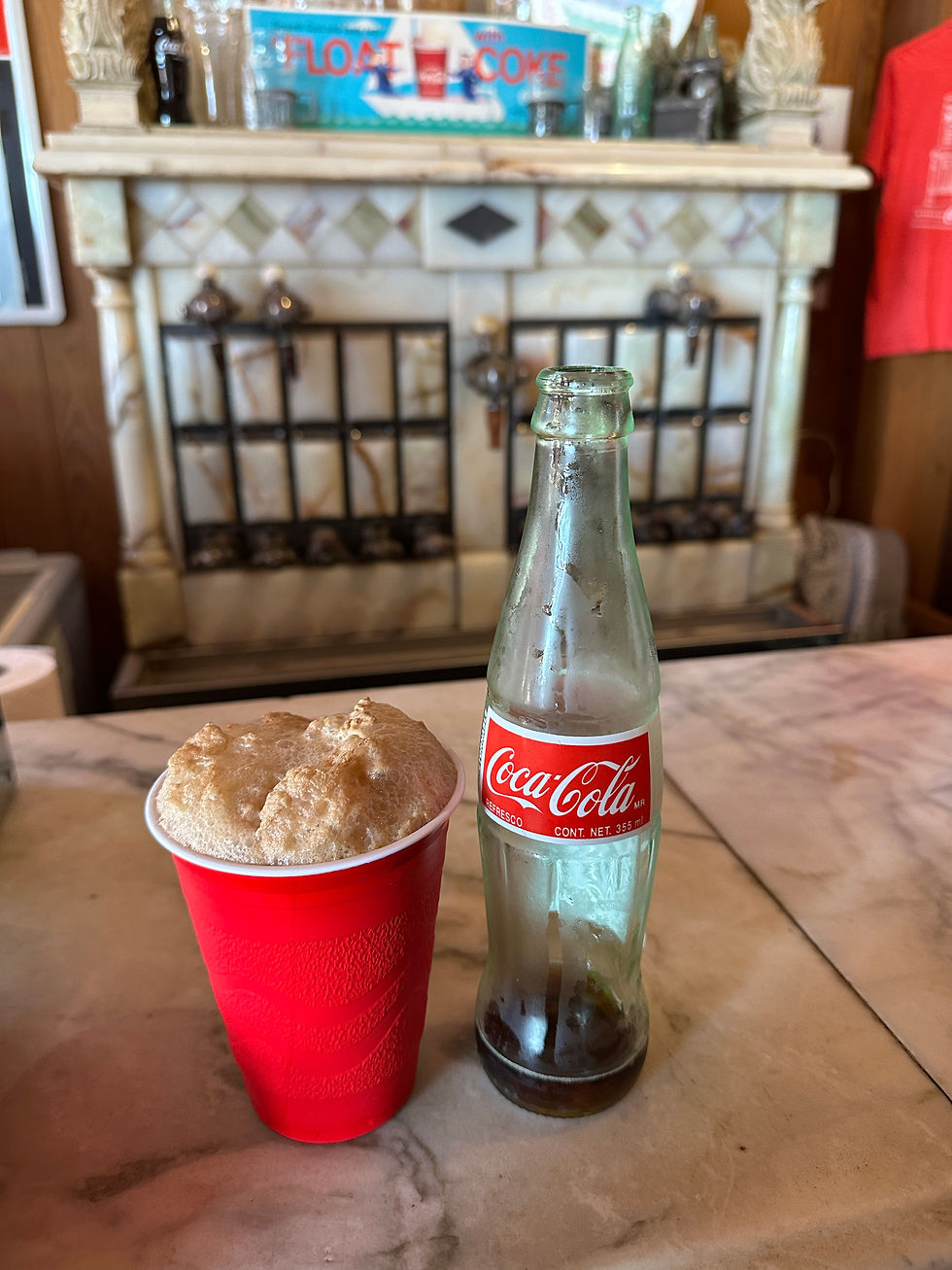
Spots along these trails include the Old Court House Museum with its historic displays, the Biedenharn Coca-Cola Museum showcasing how the iconic soft drink was first bottled in Vicksburg, the Old Depot Museum that contains a diorama of the battlefield, and the Catfish Row Art Park, containing regional art pieces and a play area for children, plus the 32-panel Vicksburg Riverfront Murals. The Jesse Brent Lower Mississippi River Museum features a full-size river tugboat and displays of life along the river, including how the Mississippi River changed course in the late 19th century, abandoning the town, and how the Yazoo River Diversion Canal was built to accommodate this loss.
Vicksburg is also home to numerous historic churches and homes. Christ Episcopal Church adorned with Tiffany windows, for example, dates to 1839 but still conducts weekly services. One of the oldest homes in Vicksburg, the McNutt House, once belonged to Mississippi Gov. Alexander McNutt. The McRaven House is called the "Most Haunted House" in Mississippi, but it's also one of the most unique. You can read about the McRaven here.

A Camel at Vicksburg (and other weird Civil War tales)
The park contains more than 1,300 monuments and statues honoring those who fought and died here, many of which had conflicting loyalties. One such man is Lt. Gen. John C. Pemberton, Confederate commander of the Army of Vicksburg. Pemberton hailed from Philadelphia and was trained at West Point and decorated for gallantry serving the United States in the Mexican War. When Southern states succeeded, he chose to fight for the Confederacy, mainly because his southern-born wife insisted he do so. He wasn’t alone. Several of the Confederate military leaders hailed from Northern town but married southern women who told them what colored uniform they would choose.
Pemberton surrendered on July 4, 1863, but served the remainder of the war as a lieutenant colonel of artillery, still loyal to the South.
me
The majority of men who served with Grant came from Illinois, so it’s no surprise that one of the largest monuments in the park is the Illinois Memorial perched high on a hill. Visitors can walk inside and read the names of troops, plus quotes from the “sons of Illinois.” What’s unique about this memorial are the busts of Abraham Lincoln, Grant and Richard Yates, none of whom were born in Illinois.
Animals in battle
A female bald eagle sits atop the Wisconsin State Memorial to honor the mascot of the 8th Wisconsin Infantry. “Old Abe” was carried into battle at the top of a staff and would fly overhead screeching, much to the dismay of the opposing side. The bird returned to Wisconsin and sat upon a perch in the capital at Madison. Old Abe later became the screaming eagle icon on the patch of the U.S. Army’s 101st Airborne Division.
On the Confederate side, the Mississippi 43rd Infantry enlisted a camel named “Old Douglas” to their cause. The camel helped carry supplies and participated in the battles of Iuka and Corinth before being shot on June 27, 1863, in Vicksburg. The Union soldiers ate Old Douglas and Confederates shot the man who killed their beloved animal. Old Douglas is buried with honors at Cedar Hill Cemetery in Vicksburg.
Shirley House, a reflection of mixed politics
Next to the Illinois Monument is the Shirley House, the sole surviving antebellum house within the park. It’s also a great example of how the Civil War can’t be explained in simple terms. James and Adeline Shirley lived in the white structure on a hill to escape the yellow fever that ravaged Vicksburg in summer. James Shirley was a northern-born judge and merchant and sided with the Union.
Albert was a Jennie

Woman were not allowed to fight in early American wars but many disguised themselves as men and took up arms. Albert Cashier was born Jennie Hodgers but kept that a secret as he fought as an infantryman in the Illinois 95th. (He spent his life as a man so we’ll use that pronoun here.) After the war was over, Cashier received a veteran’s pension, working various jobs and voting in elections. A car accident and a trip to the hospital revealed his gender. Regardless, most of his fellow soldiers supported him. After Cashier’s death in 1915, he was buried in full uniform and the tombstone carried his male name.
Brother vs. Brother
At one point in the Vicksburg battle, two Missouri troops, one Confederate and one Union, faced each other. Since a Missouri family had two sons enlisting on different sides of the war, one regiment called out to the other to see if his brother was on the other side. He was. The two embraced over a flag of truce.
Some other unique happenings…
Vicksburg existed at a hairpin turn in the Mississippi River, so Grant attempted to dig a canal to divert the river away from the city, giving him control of the Mississippi. The plan failed, but in 1876, one day before Grant’s birthday, the river switched courses on its own. Visitors to the park can view the original river pattern from Fort Hill, today a manmade diversion canal from the Yazoo River to connect Vicksburg to that elusive Mississippi.
A Confederate fortification existed within the park at Clay Street, the site of fierce fighting. A year after Vicksburg’s surrender, the Anshe Chesed Congregation purchased the property for a Jewish cemetery. Today, visitors can view the lovely old tombstones resting on a hill.
Great Peace Jubilee
Thousands visit the Vicksburg National Military Park each year for the Civil War history, to offer their respect to the fallen—including the largest number of African American troops in a national cemetery—and to understand the power of reconciliation. One of the main goals of the park’s establishment was to offer a place for Civil War veterans to come together in remembrance and peace, including being the site of the Great Peace Jubilee of 1917. When visitors enter the park, they are greeted by a memorial to that event.
At the end of the 19th century, veterans on both sides of the Civil War petitioned the government to preserve the battlefields and Congress agreed, establishing sites at Chickamauga, Antietam, Chattanooga, Shiloh, Gettysburg and Vicksburg. In 1933, all six were transferred to the National Park System.
In addition, Congress appropriated $100,000 for the Great Peace Jubilee of 1917, a massive gathering of veterans at Vicksburg. With money left over, a memorial arch was created, as a “personification of the reconciliation of the veterans of Vicksburg,” and it stands today at the park entrance.

If you go...
Duff Green arrived to Vicksburg in 1847 hoping to make his fortune as a broker in cotton. He couldn’t have picked a better time, no pun intended. The railroad was coming through, the river provided access, and the cotton gin changed how cotton was processed. Green married Judge Lake’s daughter and the judge gave them an entire city block as a wedding gift. He used most of the land to build a palatial mansion with three floors, including a dramatic staircase in front where visitors would make a grand entrance to his balls.

Visitors may stay at Green’s house and enjoy an equally impressive breakfast. History abounds throughout the bed and breakfast, including a cannonball still lodged in the ceiling in one bedroom. Confederate Jefferson Davis visited the Greens and the bottom floor was once used as a hospital during the 1863 Seige.
Some visitors claim a Confederate soldier roams the hallways and others have spotted Annie, the Greens daughter who died young.
The 1830 Anchuca Historic Mansion and Inn, one block west, offers history and a few ghosts for those who spend the night, while serving up meals to all in its garden room restaurant. The home was once owned by Davis’s brother, Joseph Emory Davis, and when Jefferson Davis was released from prison following the Civil War, he gave his last public speech from Anchuca’s balcony.
A new inn to the scene is Baer House Bed and Breakfast. Louisiana native Leona Blume moved to Vicksburg at a young age and purchased the prior-1850 Greek Revival home during Reconstrution. It had been damaged during the seige and she redesigned the home in the Eastlake style. She later married Jewish merchant Lazarus Baer. The two-story inn offers several guest rooms filled with period antiques and sitting parlors filled with books on Vicksburg and the Civil War. A stay here comes with a delightful Southern breakfast.
History Aside
It’s not all history in Vicksburg. Visitors may also enjoy the casinos, shopping, day spas, and dining options that range from breweries to Delta tamalas. Whatever your pleasure, end the day at 10 South Rooftop Bar & Grill and enjoy a signature cocktail, tangy pretzels with a honey-mustard sauce, and one of the best Mississippi River sunsets in the nation.

Weird, Wacky & Wild South is written by travel writer Cheré Coen, who had ancestors living in Vicksburg during and after the seige. She hails from New Orleans which doesn't have weird Civil War history besides an arrogant Union officer and some spoons, but that's another story.


Comments